Puffers
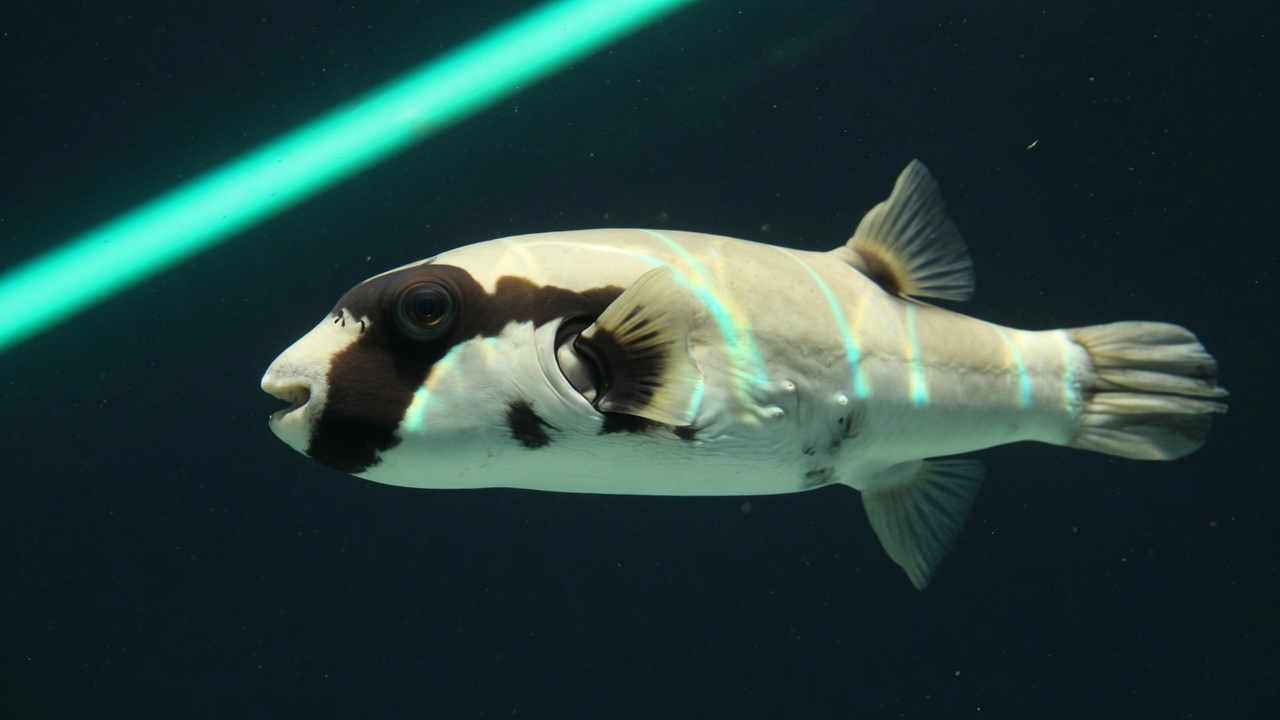
Masked puffer (Arothron diadematus)
The Masked puffer (Arothron diadematus) belongs to the family Tetraodontidae (puffers) and is endemic to the Red Sea and the Gulf of Aden. It reaches about 30 cm and is found at 1–50 m depth. IUCN conservation status: Least Concern. Treat it with caution (toxic if eaten): do not touch or handle it.
Quick facts
| Scientific name | Arothron diadematus |
|---|---|
| Authority | Rüppell, 1829 |
| Family | Puffers (Tetraodontidae) |
| Common name (IT) | Pesce palla mascherato |
| Common name (EN) | Masked puffer |
| Maximum size | 30 cm |
| Depth | 1–50 m |
| Distribution | Endemic to the Red Sea and Gulf of Aden |
| IUCN status | LC — Least Concern |
| Hazard | Toxic if eaten |
Description
Endemic to the Red Sea and the Gulf of Aden; it does not occur elsewhere in the Indo-Pacific.
Diving hazard — Toxic if eaten: keep your distance, and never touch, corner or feed it.
Where it lives
Endemic to the Red Sea and the Gulf of Aden; it does not occur elsewhere in the Indo-Pacific.
- Egitto
- Aqaba
- Arabia e Sudan
Diving safety
Toxic if eaten. This fish is toxic if eaten — its skin and organs can carry potent toxins. It is not dangerous to touch briefly, but must never be consumed.
If it happens
- Do not eat it. If someone has ingested it and shows tingling, weakness or breathing trouble, seek emergency care immediately.
After
- Any suspected poisoning needs a hospital: there is no home treatment.
Frequently asked questions
- What family does the Masked puffer belong to?
- The Masked puffer (Arothron diadematus) belongs to the family Tetraodontidae (puffers).
- Is the Masked puffer dangerous?
- It needs caution: Toxic if eaten. Keep your distance and do not touch or handle it.
- Is the Masked puffer endemic to the Red Sea?
- Yes — it lives only in the Red Sea and the Gulf of Aden.
- How big does the Masked puffer get?
- It reaches a maximum length of about 30 cm.